The Main Insulation Types
Five materials cover the vast majority of residential insulation projects. Each has a real place — the trade-offs are what matter.
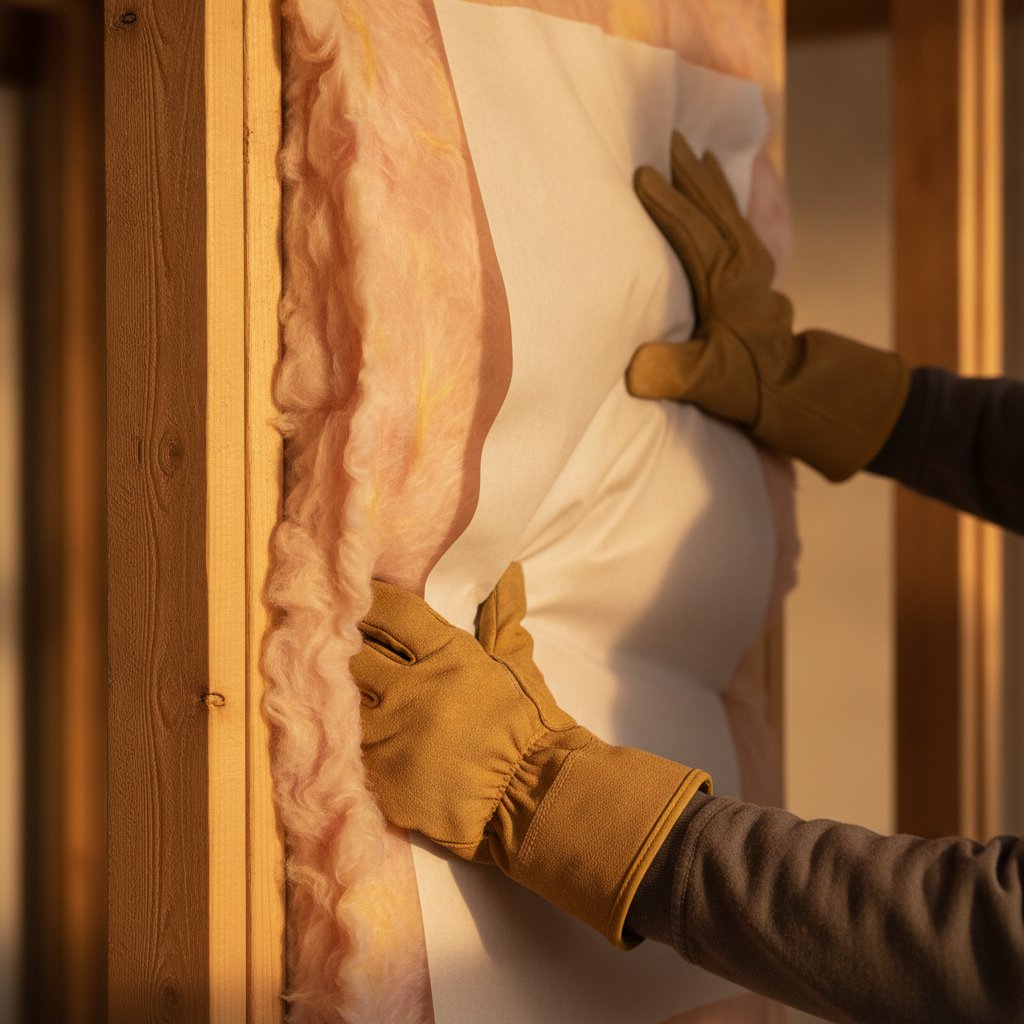
Fiberglass
DIY-friendlyExtremely fine strands of spun glass, sold as batts/rolls or as loose-fill for blown-in applications.
- R-value/inch:
- R-2.9 to R-3.8 per inch (batts); R-2.2 to R-2.7 per inch (blown-in loose-fill)
- Relative cost:
- $ (lowest cost tier)
- Best for:
- Standard stud-bay walls, attic floors, floors over unheated spaces.
- Widely available and generally the least expensive option per square foot
- Non-combustible and won't absorb moisture the way some organic materials can
- Batts are cut to fit standard stud and joist spacing, making them approachable for a first DIY project
- Doesn't seal air leaks on its own — gaps and compression reduce real-world performance well below the rated R-value
- Fibers can irritate skin, eyes, and lungs during handling, so proper PPE matters
- Lower R-value per inch than foam options, so it needs more depth to hit the same target
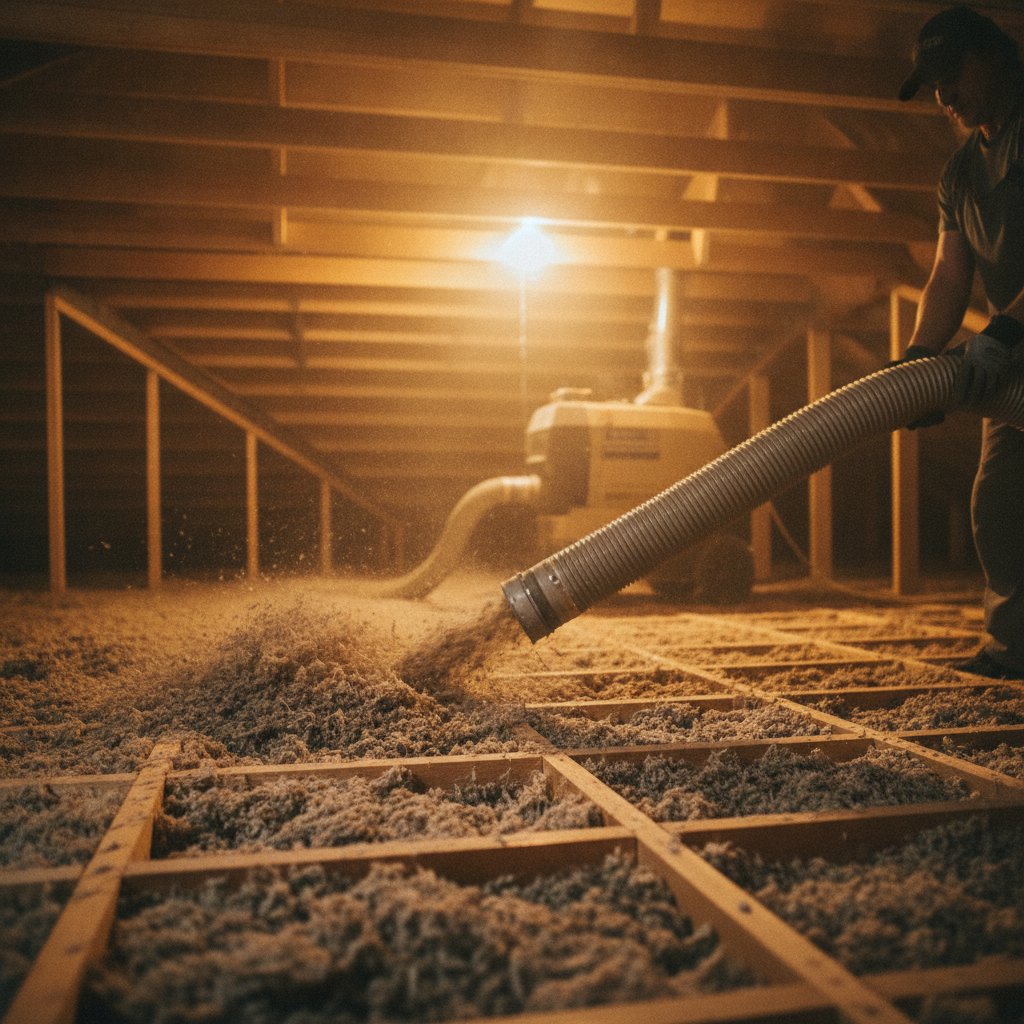
Cellulose
DIY-friendly with a rented blowerMostly recycled paper fiber (often 80%+ post-consumer newsprint), treated with borate compounds for fire and pest resistance.
- R-value/inch:
- R-3.2 to R-3.8 per inch (dense-packed or loose-fill, blown-in)
- Relative cost:
- $$
- Best for:
- Attic floors, retrofitting closed existing walls (dense-packed through small drilled holes), open new-construction wall cavities.
- High recycled content and one of the more genuinely eco-friendly mainstream options
- Settles into irregular spaces and around obstructions better than batts
- Dense-packing does a reasonable job reducing air infiltration compared to loose fiberglass
- Can settle and lose some loft (and R-value) over time if not installed at the right density
- Absorbs and holds moisture more than fiberglass, which is a concern in humid climates or leak-prone areas
- Blown-in equipment rental and cleanup add friction to a DIY attempt
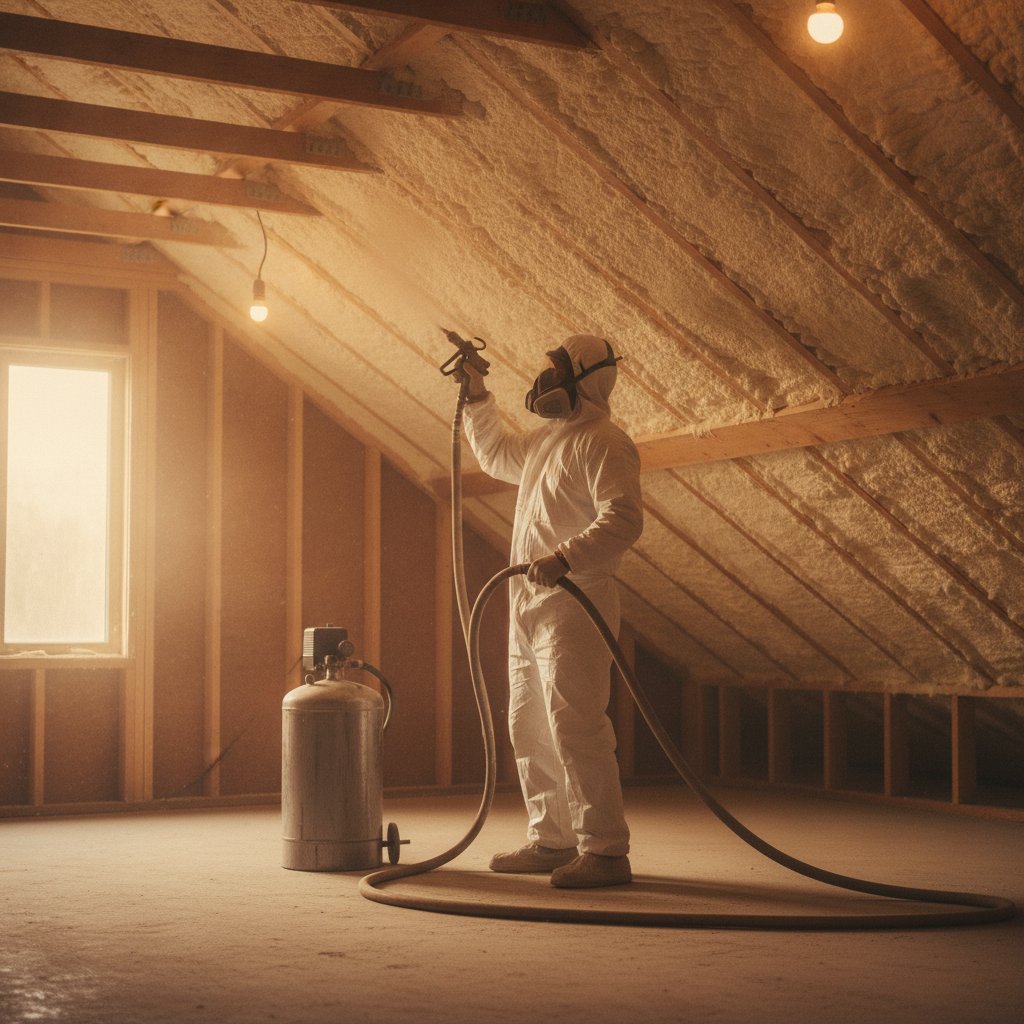
Spray Foam
Professional-onlyLiquid polyurethane components (a resin and an isocyanate) that react and expand on contact, curing into a rigid or semi-rigid foam.
- R-value/inch:
- Open-cell: R-3.5 to R-3.6 per inch. Closed-cell: R-6.0 to R-7.0 per inch.
- Relative cost:
- $$$ to $$$$
- Best for:
- Rim joists, hard-to-reach cavities, roof decks (unvented assemblies), and anywhere air sealing matters as much as R-value.
Open-cell vs. closed-cell, in short
Open-cell foam is softer, less expensive, and more vapor-permeable — often used on interior walls and roof decks where a vapor barrier isn't the goal. Closed-cell foam is denser, roughly double the R-value per inch, and acts as its own vapor barrier and rigid air/moisture seal — the usual choice for rim joists, below-grade walls, and tight cavities where every inch of depth counts.
- Air-seals and insulates in a single step — no other material does both at once as effectively
- Closed-cell foam has the highest R-value per inch of any common insulation, useful in space-limited cavities
- Adds meaningful structural rigidity (closed-cell) and a degree of moisture resistance
- The most expensive option per square foot by a wide margin
- Mixing ratios, temperature, and application technique all have to be right — installation quality is the single biggest variable in how it performs and off-gasses
- Once cured and covered, it's difficult and costly to remove if a problem is found later
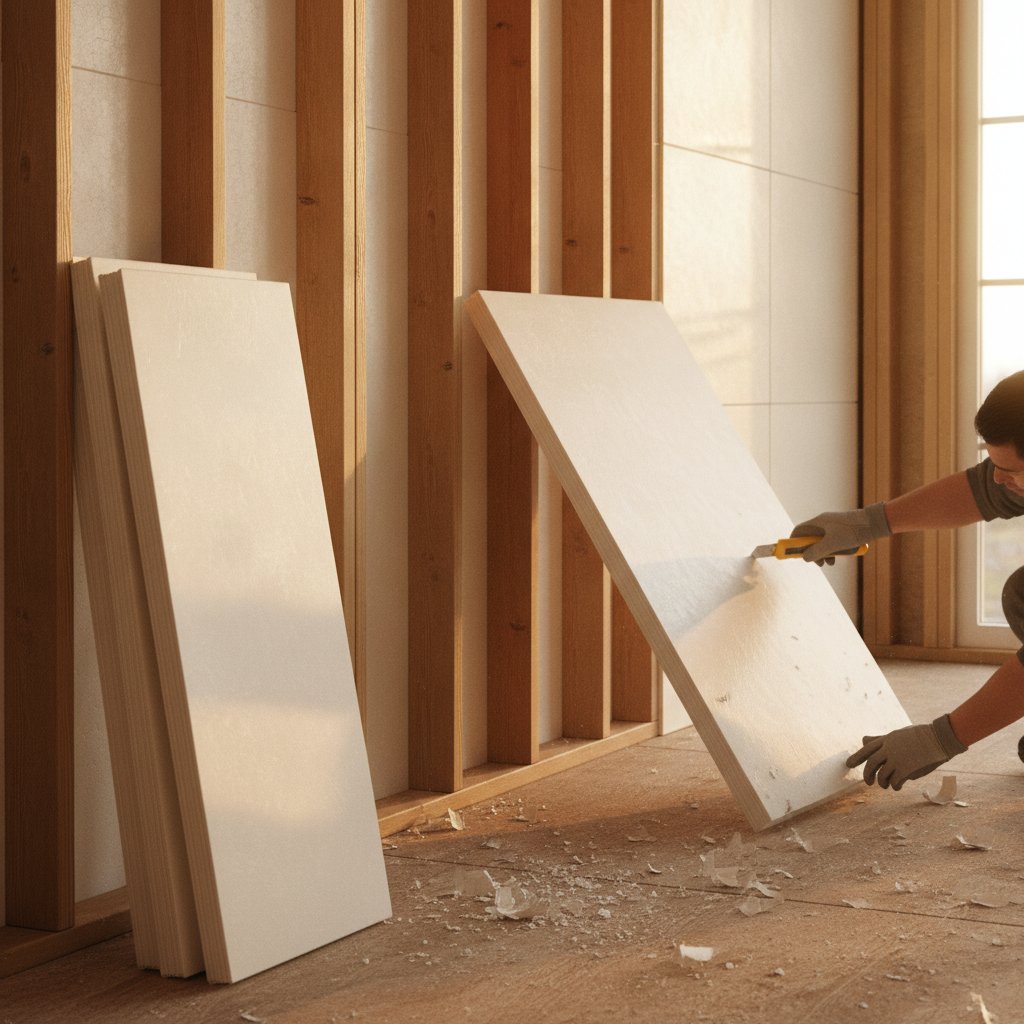
Rigid Foam Board
DIY-friendlyPanels of expanded polystyrene (EPS), extruded polystyrene (XPS), or polyisocyanurate (polyiso), cut to size and fastened or adhered in place.
- R-value/inch:
- R-3.8 to R-4.4 per inch (EPS/XPS); up to R-6 to R-6.5 per inch (polyiso)
- Relative cost:
- $$
- Best for:
- Basement and foundation walls, exterior continuous insulation, unvented low-slope roofs, garage doors.
- High R-value per inch relative to fiberglass or cellulose, useful where wall depth is limited
- Rigid panels are straightforward to measure, cut, and install with basic tools
- Naturally resists moisture better than fibrous materials, which is valuable below grade
- Seams between panels need to be taped or sealed or you lose much of the air-sealing benefit
- Doesn't conform to irregular spaces or obstructions the way loose-fill materials do
- Some types require a fire-rated cover (like drywall) when used on interior living spaces per code
Mineral Wool
DIY-friendlySpun rock (basalt) or industrial slag fibers, sold as batts, rolls, or rigid boards.
- R-value/inch:
- R-3.0 to R-3.3 per inch
- Relative cost:
- $$$
- Best for:
- Fire-rated wall and floor assemblies, acoustic/soundproofing applications, standard stud walls.
- Naturally fire-resistant — rock wool can withstand extremely high temperatures without supporting combustion
- Denser than fiberglass, which makes it noticeably better at blocking sound transmission
- Water-repellent and won't wick moisture the way cellulose can
- Costs more than fiberglass for a similar R-value
- Heavier and denser, which can make cutting and fitting slightly more physical work
- Less widely stocked at big-box retailers than fiberglass, so sourcing can take extra steps