Back to blog
Buying & DIY GuidanceAugust 4, 2026·4 min read
Is Spray Foam Insulation Safe? What Homeowners Should Know Before They Buy
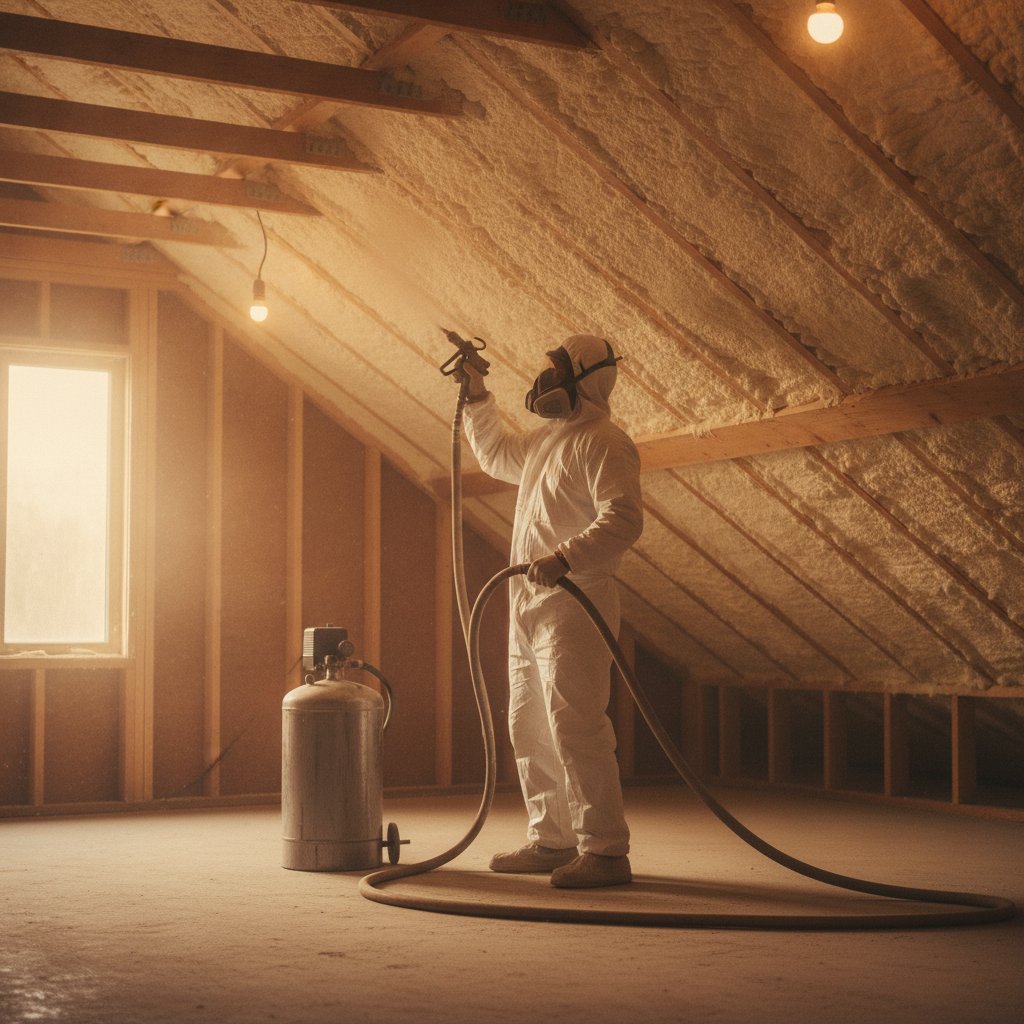
If you've researched spray foam insulation for more than a few minutes, you've probably run into unsettling anecdotes — insurance companies scrutinizing it, buyers walking away from home sales, homeowners paying to have it removed. It's worth addressing this honestly rather than either dismissing it or letting it scare you off a material that, done right, works well.
The concerns are real, and they come from real cases — but the pattern behind them is more specific than "spray foam is risky." Insurance underwriters have grown cautious around spray foam installations that were unpermitted, undocumented, or installed by unlicensed applicators, because those jobs carry a genuinely higher risk of problems down the line. Buyers walking away from home sales usually trace back to a specific, discoverable issue found during inspection — not spray foam as a category.
Spray foam is a two-component chemical product (commonly called the A side and B side) that has to be mixed in the correct ratio and applied under the right conditions to cure properly. When that goes wrong, real problems can follow:
The fix for essentially all of the above is the same: a licensed, insured, permitted installer who follows manufacturer specifications, pulls the required permits, and documents the job. That documentation — what was applied, where, at what thickness, by whom — is exactly what resolves an insurance underwriter's or a home buyer's concerns, because it demonstrates the work was done to spec rather than leaving it a guess.
Pros: highest R-value per inch of common insulation materials, excellent air-sealing (fills gaps other materials can't), can add structural rigidity in some closed-cell applications, long-lasting when properly installed.
Cons: significantly more expensive than fiberglass or cellulose, professional installation only (not a safe DIY project — see our DIY vs. Professional guide for why), the reputation risk discussed above if installed improperly, more difficult and costly to remove or modify later than other materials.
If you're considering spray foam, the honest advice is straightforward:
This is exactly the gap CCA's contractor-matching network is built to close — every contractor is checked for licensing and insurance before being part of the network, which is the concrete version of "protect yourself" rather than a vague warning.
Is spray foam insulation worth it? For the right application — air sealing hard-to-reach gaps, high-performance new construction, spaces where its higher R-value per inch matters — yes. For a simple attic top-up where fiberglass or cellulose does the job for less, the cost premium may not be worth it. It depends on your specific project.
Why do insurance companies not like spray foam insulation? Most underwriting caution traces back to undocumented, unpermitted, or improperly installed jobs — not spray foam as a material category. Properly permitted, professionally installed and documented spray foam doesn't carry the same red flags.
Considering spray foam for your project? Get matched with a vetted, insured contractor who does it right — permits, documentation, and manufacturer specs included.
Get matched with a vetted, insured insulation contractor — free, no obligation.
Get Matched