Back to blog
Comfort & PerformanceJuly 21, 2026·4 min read
Does Insulation Reduce Noise? A Homeowner's Guide to Soundproofing
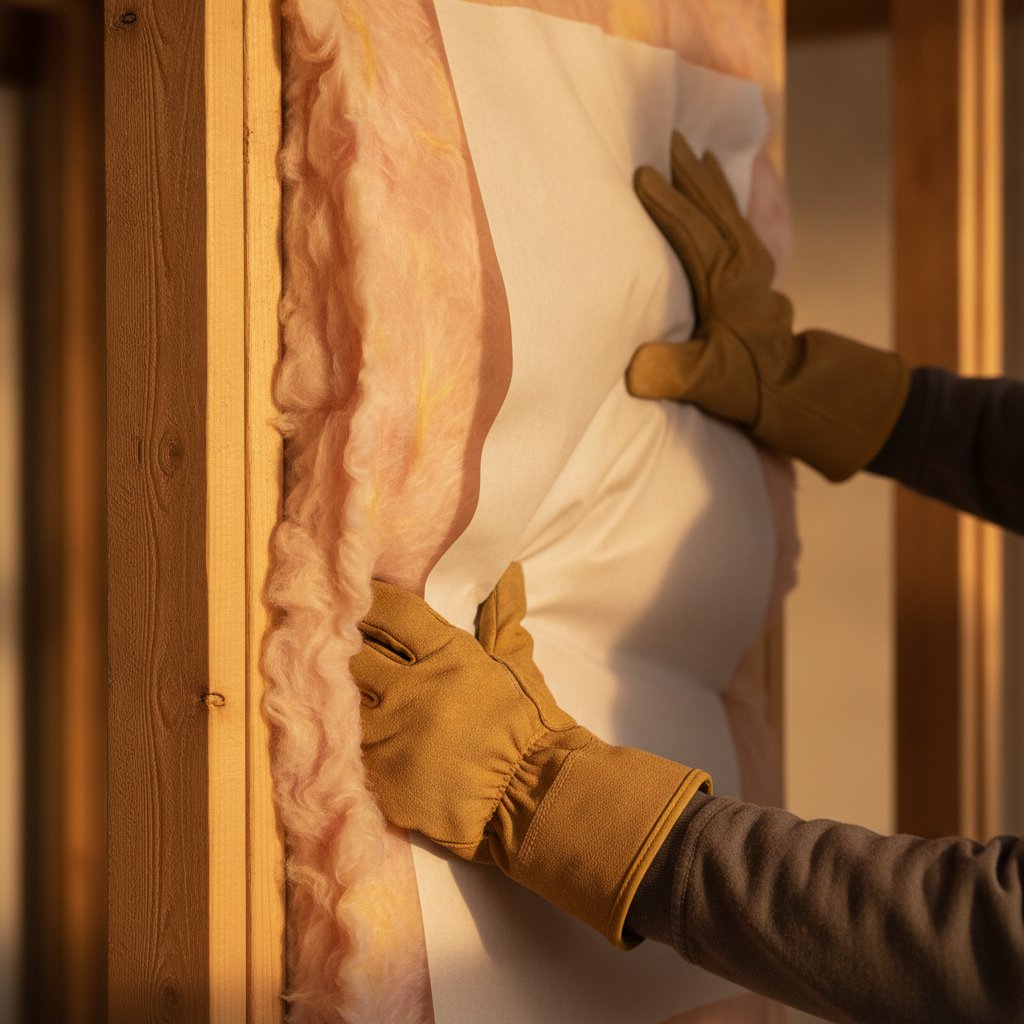
If you're dealing with a noisy neighbor, a home office that needs quiet, or a nursery next to a busy street, you've probably wondered whether adding insulation will help. The honest answer: somewhat, but insulation alone isn't full soundproofing — here's what actually helps and why.
Sound travels two main ways: through the air (airborne sound — voices, music, traffic) and through solid materials as vibration (structure-borne sound — footsteps, slamming doors). Most standard walls are actually pretty good at transmitting both, because a typical stud wall with drywall on both sides acts almost like a drum — vibrations pass through the studs and framing efficiently.
Insulation helps with the airborne portion by filling the empty cavity inside the wall, which would otherwise let sound resonate more freely. It does less for structure-borne sound, which travels through the solid framing itself, bypassing the cavity insulation almost entirely.
Not all insulation performs the same acoustically. Roughly, from best to more modest sound performance for a given thickness:
Spray foam and rigid foam board are optimized for thermal performance and air sealing, not acoustic dampening — they're not the go-to choice when sound is the primary goal.
This is the honest caveat competitors rarely state clearly: filling a wall cavity with denser insulation measurably reduces sound transmission, but it's one piece of a bigger picture. Genuine soundproofing typically also involves:
If noise is a serious problem, insulation upgrades help, but a contractor who understands acoustic treatment (not just insulation) can advise on whether decoupling or added mass is worth the extra investment for your situation.
Home office: mineral wool in interior walls, combined with sealing any gaps around the door, is a reasonable starting point for reducing distraction from adjacent rooms.
Nursery: similar approach — mineral wool plus attention to door seals, since a fully quiet room usually depends more on the door than the walls.
Shared apartment wall: insulation upgrades inside a shared wall usually aren't possible for renters, but mineral wool behind furniture placement and door/window sealing can still help at the margins.
Does spray foam block sound? Not particularly well compared to denser materials like mineral wool — its strength is thermal performance and air sealing, not acoustic mass.
What's the best insulation for soundproofing walls? Mineral wool generally performs best among standard insulation materials, though true soundproofing usually requires combining it with decoupling and sealing techniques.
For material-by-material detail including mineral wool's other properties, see our Types of Insulation guide. If a noise problem is significant enough to warrant a real acoustic assessment, get matched with a vetted, insured contractor who can evaluate your specific situation.
Get matched with a vetted, insured insulation contractor — free, no obligation.
Get Matched